Thursday, November 20, 2014

Annexation Round-Up: Medlock's Schools

Awesome neighbor Brad create this map* and we added some labels for clarity. The map combines the recently unveiled
LaVista Hills (a mash-up of the Briarcliff and Lakeside proposals), the proposed annexation of Druid Hills into Atlanta (which includes Fernbank and Briar Vista Elementary School attendance zones, Druid Hills High School and Emory University), and maps of Decatur and Avondale (with proposed annexations included).
The popular kid in the middle, wearing green, is our Medlock neighborhood.

This post looks like more of the same: annexation blah blah blah! But it's actually about something extremely critical to our neighborhood: our schools (literally) and our attendance zones.

Our high school: "Together in Atlanta" is a group that formed in response to the DeKalb County School System's refusal to consider the proposed Druid Hills Charter Cluster. The cluster would have given more local control to parents and administrators of Druid Hills High School and all its feeder schools. Following a frustrating waiting period (the first submission was rejected; the second proposal was never put on the agenda by the DeKalb County School District board), the charter proposal was withdrawn by the organizers.  A subset of the planning group decided to split the cluster along neighborhoods served by Fernbank Elementary and Briar Vista Elementary and proposes to move these schools, as well as Druid Hills High School, into the Atlanta Public Schools (APS) system via annexation. An oft-repeated 1918 legal precedent claims that if a school's whole attendance zone is shifted to a new city, the city can have the buildings for free. That could allow APS to acquire the new Fernbank school and Briar Vista campuses; a Druid Hills High School take-over seems less clear, as only ~31% of Druid Hills High's attendance comes from the area currently included in the "Together in Atlanta" annexation plan. WABE reports that the group's annexation map has support from Atlanta mayor Kaseem Reed, and that DeKalb County Interim CEO Lee May has complained that DeKalb County was not consulted. To be fair, it seems that nobody consults the County when annexation plans are drawn, at least not publicly (cf., every other new annexation and city proposed last year). It is refreshing to hear a County officer publicly protest, as one would expect would happen every time that the Count's coffers, and ability to provide the services required by law, are threatened.

Not surprisingly, many are disappointed and even angry that Druid Hills interests at the driving seat are proposing this "grab and run"the Druid Hills Charter Cluster concept drew heavily on the benefits of promoting interaction and collaboration among the communities within in the Druid Hills High attendance zone.

Our elementary schools: Meanwhile, the new Briarcliff/Lakeside city proposal (aka "LaVista Hills") has drawn its boundary to include Laurel Ridge Elementary, which currently serves elementary school-aged Medlock children. Laurel Ridge, too,  is part of the Druid Hills High School feeder pattern. LaVista Hills does not include the Medlock neighborhood.

Medlock children also have the option of attending the International Community School (ICS), a K-6 DeKalb County School District charter that currently occupies the grounds of Medlock Elementary (which closed in May 2011 due to redistricting). ICS is unique: 50% of its students are refugees and the rest come from all over the County via lottery. Should our neighborhood's status change and should we no longer be part of the DeKalb School System, ICS's lease would be in jeopardy. Any annexations that impact the County's school system budget of course also impact the school's operations.

Decatur would immediately syphon millions of dollars out of the
DeKalb County Schools District, and that number will only grow as
our area's business corridor continues to develop. Click to enlarge.
Source: Medlock annexation survey, Nov. 2014
Denial of service: The Medlock neighborhood survey favored joining the City of Decatur, even though Decatur had already stated their lack of interest in our neighborhood during a meeting with the MANA board. Decatur has repeatedly stated its school system is operating at capacity and the school-age population will continue to grow. Decatur proposes to address this issue through an unreasonable annexation plan that would sequester extensive commercial revenue out of DeKalb County's tax digest (added bonus: these monies would also help modulate future property tax increases for Decatur residents, at the expense of the rest of the county). Click on the image to the left to see how much Decatur's plan would impact DeKalb County schools.

Obviously children will go to school somewhere once the dust settles, but this situation is quite disturbing to Medlock neighborhood residents who have been part of the Druid Hills High School family for decades and who are currently loving the learning environment at Laurel Ridge Elementary. To have external interests heedlessly tear apart our school attendance patterns (and funding) is not only harmful, it is outright bizarre. We trust that legislators will appreciate how irregular a situation this is, and acknowledge its impact on our neighborhood and all our residents, whether they have school-age children or not. 

What's next?: Mark Niesse at the AJC reported that Amy Carter (Chairwoman of the House Governmental Affairs Committee) has named the 5-person committee that will draw boundaries for the proposed new cities. The threat of this outcome was in place since summer, when Briarcliff, Lakeside and Tucker organizers were instructed to produce non-overlappling maps by November 15; they missed the deadline. Going forward, the AJC notes that map-making will be in the hands of
Rep. Buzz Brockway, R-Lawrenceville, buzz.brockway@house.ga.gov
Rep. Barry Fleming, R-Harlem, barry.fleming@house.ga.gov
Rep. Mark Hamilton, R-Cumming, mark.hamilton@house.ga.gov
Rep. Howard Mosby, D-Atlanta, howard.mosby@house.ga.gov
and Rep. Mary Margaret Oliver, D-Decatur, mmo@mmolaw.com
Their mission, which they have chosen to accept: "to produce a map decided by a majority vote. That map would then be considered during the regular legislative session, which begins in January."

If you would like to reach out to these representatives to say "please look out for our great neighborhood and DeKalb County as a whole", or whatever outcome you prefer, their addresses are included above. The school attendance issue is separate from the annexation issues that these legislators are trying to address, but it is also obvious that the committee's decisions will impact school attendance and will no doubt be informed by that issue.
___________
* Map Sources:
http://lavistahills.nationbuilder.com/
http://druidhills.org/2014/10/15/cityhood-annexation-options-and-their-effects-on-taxes-and-schools/ http://www.decaturga.com/Modules/ShowDocument.aspx?documentid=5445

Tuesday, November 18, 2014

Sandhill cranes over Medlock

The fall migration is on, and the sandhill cranes were seen flying by this morning, chatting up a storm. Their flight path goes straight over us and our neighbor Kathryn just reported that 800+ just flew over the Chattahoochee Nature Center.

To learn more about sandhill cranes, click here.

For a video to familiarize yourself with their calls (and you will hear them before you see them, for sure!), go here. In our area, they will be flying very high up and it won't be as loud. But given the altitude, size and grouping of the birds, and the calls, you will know it ain't geese!

Monday, November 17, 2014

Annexation Round-Up: cartographically anticlimactic

via http://lavistahills.nationbuilder.com/

+ Today, the group that resulted from the merging of the Briarcliff and Lakeside proposals issued a statement and new map via their Facebook page (and their new website).  Dubbed LaVista Hills, the map still overlaps City of Tucker's proposed map (over the Northlake Mall area and nearby business) which means the November 15 deadline remains unmet. But, according to the statement, "In the coming weeks the combined group will continue work towards readying LaVista Hills for the 2015 legislative session." If successful, the proposal would create DeKalb's largest city, with 72,000 residents.

The statement closes with this inclusive note: "The proponents of the City of LaVista Hills greatly appreciate the support that Briarcliff and Lakeside received from residents of areas that are not included in our combined map, and are committed to LaVista Hills agreeing to any future annexation requests from those areas."

Medlock and Clairmont Heights are not included in the map. Our sister neighborhood Laurel Ridge and its elementary school (to which Medlock Park children are districted) is now within the LaVista Hills map.

Meanwhile (thanks to Dawn for the announcement!) the Laurel Ridge Shamrock Civic Association (LRSCA) has scheduled two meetings to discuss options that are still open to all of us:

1. Atlanta Annexation: LRSCA has invited Atlanta Councilman Alex Wan and APS School Board Member Matt Westmoreland to come and talk to our community about Atlanta annexation. The information session will be on Wednesday Nov. 19 at 7 pm at University Heights Methodist Church.
[NB: Atlanta annexation of a larger area is being looked at as a way to keep the Druid Hills school cluster together.]

2. Blueprint for DeKalb. Members of this citizen driven movement to improve DeKalb will be coming to Druid Hills Middle School to come and discuss their research and recommendations. Please come out on Thursday Nov. 20 at 7pm at Druid Hills Middle School Library to learn more about this citizen driven group.

+ The Laurel Ridge Shamrock Civic Association reached out to Emory University for additional information on Emory's stand on Atlanta annexation discussions. Mr. Charlie Harmon (VP of Government and Community Affairs) stated by email that "Emory continues to monitor the efforts by engaged citizens on all aspects of the cityhood process. We support complete and timely transparency of all efforts. And we are sensitive to our neighbors and their wishes.”  LRSCA followed up by phone and noted that:
"Mr. Harman also said that the statement that was made at the Laurel Ridge Elementary Town Hall about Emory was inaccurate. He stated that Emory is not driving any talks for annexation, and that this was being pushed by Druid Hills. He was asked if Emory would go to Atlanta if Druid Hills decided that was the course that they wanted to take and that yes, but they would need to keep ALL aspects of their campus in one municipality." For full text, see LCSCA site, Nov. 9, 2014, under heading "Statement from Emory University about Cityhood/Annexation With Update From Emory"
. . .

By now, it is probably obvious that maps change and will continue to change so stay alert and involved. So long as uncertainty remains the constant, it behooves us to oppose City of Decatur's efforts to annex significant swaths of commercial property along North Decatur Road and beyond (e.g., Medline LCI area). 

Heartburn talk @ DeKalb Medical [Nov 18]

So timely!
November 18 (Tuesday), 6:30-7:30 p.m., DeKalb Medical -North Decatur, Ground Floor Theatre 

Do you wonder if you will be taking antacids and pills the rest of your life to treat your heartburn? Hear from our expert panelists on what causes heartburn, how to prevent heartburn with lifestyle changes, remedies for chronic heartburn and more. The panel includes Dr. Shirley Harris,  Dr. Scott Steinberg, dietician Leslie Trantor and Nurse Navigator Pam Briggs. The panel will focus on how you can keep chronic heartburn from disrupting your life and enjoyment of the holidays. Call 404-501-WELL to register. Parking is validated and participants receive a gift. 

Space is limited so please register by calling 404-501-WELL. 

Sunday, November 16, 2014

Thursday, November 13, 2014

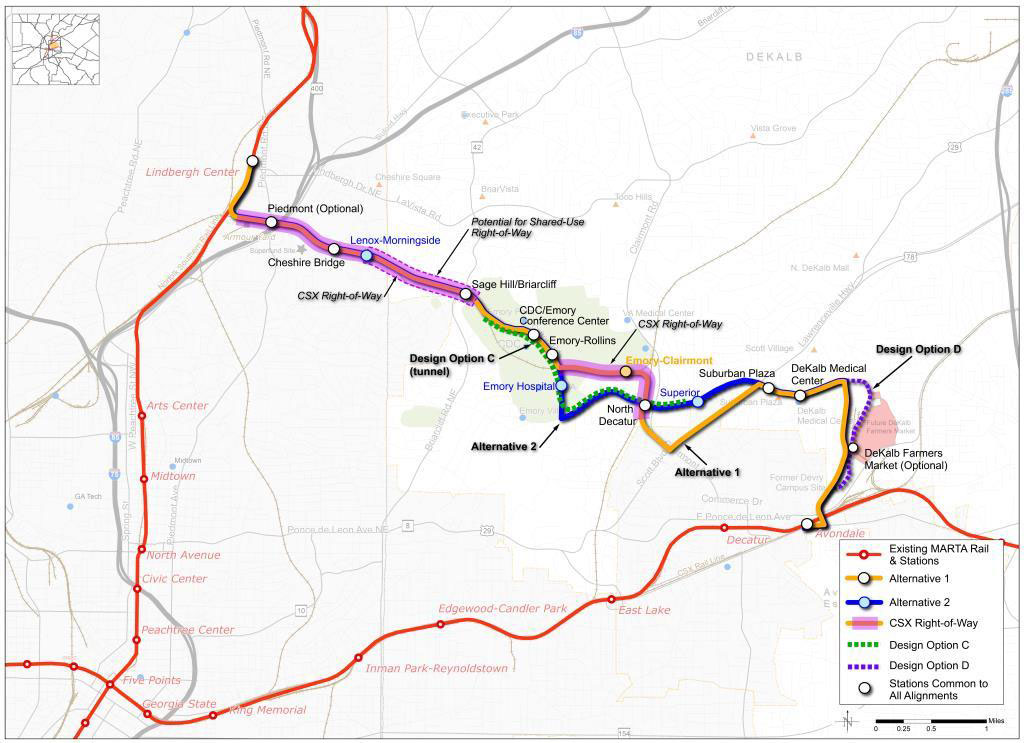
Clifton Corridor public meeting reminder via Emory

Image via Emory News Center
Two public meetings set for early December are among the next steps in a multi-year effort to bring light rail transit to the Clifton corridor, including stops convenient to the Emory campus, Emory University Hospital and the CDC. 
"This effort goes back 17 years, and this is the latest required step in what has been a protracted political and community process," says Betty Willis, senior associate vice president for government and community affairs at Emory. "This project is widely viewed as critically important to support this thriving employment center, and I have no doubt it will come to fruition once funding has been identified." Read the rest @ Emory Report.

DeKalb County's new GIS model explores the financial impact of incorporation

The November 12 Task Force on Dekalb County Operations meeting featured a presentation by Dr. Alfie Meek from GA Tech. Dr. Meek is part of a team that has developed a model to help DeKalb County better understand how incorporations impact the county's overall budget. Previous tools focused on revenue, which is easier to calculate as property and commercial tax data and business license data are readily available. This new model creates a more nuanced picture by looking at revenue vs operation costs.

The model focuses on three county funds (271, 272 and 274), as opposed to on all 30+ county funds, because those three funds are the ones that are impacted when incorporation occurs. A fund is a part of the county's budget that focuses on specific functions.

This computer model currently resides at GA Tech but will move to DeKalb County's servers by the end of the month. The public will have access. The model is not perfect but it is a great start, as it allows the users to quickly look at the costs of servicing a certain area.

To help users orient themselves, the model includes some pre-set locations to zoom into areas of interest (e.g. location of contested areas such as Executive Park). To demonstrate how the system works, Dr. Meek drew a polygon around a "test city" and pulled residential and commercial digest data as well as expenses for services to the area.  These expenses are estimated based on a line item review of existing county budgets. As was explained, the model is only as good as the data upon which it is built, and many municipalities (i.e., not just our county) cannot provide the level of detail that would be ideal for this type of simulation. That means very specific data such as where an emergency call originates and the time it takes a county employee to respond to the call and complete required actions (this example related to whether it's costlier to police commercial areas vs. residential areas). Another example discussed road maintenance, where municipalities traditionally estimate maintenance costs based on number of miles and not on a formula that accounts for both miles and number of lanes. Through individual and combined views of the three funds mentioned above, the map changes color to show if an area is a donor (that produces more revenue than it uses in services) or a recipient. Numerical and bar graph breakdowns of revenue vs. operation cost are also displayed. Users can save queries and return to them later (this data is stored at the user's computer).

The model interface allows users to select/deselect blocks to ensure the polygon covers the desired area. The model uses the existing blocks into which the county is divided but annexations rarely respect such tidy boundaries; the model would need higher resolution to provide a more granular view of finances (so, ~2000 blocks vs the current ~200+ block units that describe the whole county). This is an important point as annexations are being drawn to neatly hug the lines of desirable commercial property and the model cannot account for part of a block, just the whole block. The model assumes that a new city will take over all services and there is some flexibility to "add the services back" for example, in the case of police services. It becomes harder to generate "a la carte" scenarios and hopefully the model will continue to be refined.

The model will be applied to maps for proposed cities (the Briarcliff/Lakeside and Tucker maps are supposed to be finalized by November 15). The new model should allow some comparison between county data and data in city feasibility studies. As noted by an audience member, we can expect to see discrepancies as feasibility studies use different methodologies for their calculations. An example was that the DeKalb budget currently allocates about $3-4K per year per acre  for park maintenance but a Vinson Institute study used a $11K/year figure, based on other sources. In other words, we will soon have more information but will still need to wade through some thickets to get to the bottom of things.

Lastly, a note to naysayers: we should refrain from dwelling on why the county did not have this tool already and focus on what this model brings to the table and how it can be built upon to provide increasingly accurate data on county operations. For those who want to know what DeKalb County is doing differently this year, compared to last year, this is an example. Also see links to the Task Force website and Blueprint for DeKalb initiative on the right margin.

Our thanks to Dr. Meek and "Jay" (budget guy) for ably handling the presentation and to the Operations Task Force for getting the ball rolling on this model.